Why I Track My Energy, Not Just Steps: A Qigong Wellness Journey
For years, I chased fitness with step counts and heart rate zones—until I realized something was missing: how I truly felt. That’s when I turned to qigong, not just as exercise, but as a daily rhythm to tune into my body’s signals. Blending ancient practice with modern self-awareness, I began monitoring energy, sleep, and mood. It changed everything. This is how I learned to listen—not to numbers on a screen, but to the quiet wisdom within. What started as a search for more energy became a journey of deeper connection, resilience, and balance. This is not about achieving perfection, but about honoring the body’s natural rhythms and cultivating a sustainable sense of well-being.
The Burnout That Changed Everything
Despite logging 10,000 steps a day, hitting weekly workout goals, and maintaining a clean diet, I found myself exhausted by mid-afternoon. I was tracking everything—calories burned, heart rate variability, sleep duration—yet none of these metrics explained why I felt drained, irritable, and mentally foggy. My wearable device said I was healthy, but my body told a different story. I would wake up unrested, struggle to focus at work, and rely on caffeine to push through the day. The turning point came during a routine doctor’s visit when my blood work showed no abnormalities, yet I knew something was off. The absence of a medical diagnosis didn’t erase the reality of my fatigue. It was then I realized that modern fitness tracking, while useful, often overlooks the subtler but critical aspects of health: energy quality, emotional balance, and internal harmony.
This gap between objective data and subjective experience led me to question the very definition of wellness. Was fitness only about physical performance, or did it also include how we feel from moment to moment? I began to suspect that my relentless focus on external metrics had disconnected me from my body’s internal signals. I was measuring movement, but not vitality. I was optimizing for output, but neglecting restoration. The pursuit of health had become another source of stress, not relief. This realization was humbling, but also liberating. It opened the door to a different approach—one that prioritized listening over measuring, presence over performance, and balance over achievement.
Discovering Qigong: More Than Just Movement
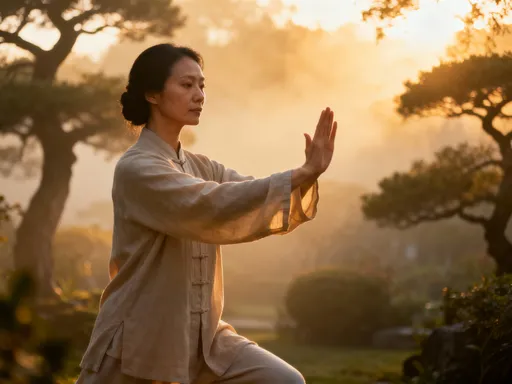
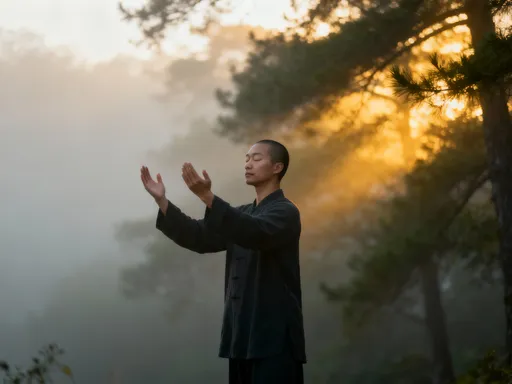
My introduction to qigong came by chance, through a friend who recommended a gentle morning practice during a particularly stressful week. I was skeptical at first. The idea of slow, flowing movements and focused breathing seemed too simple to make a real difference. I associated it with yoga or tai chi, practices I had tried briefly but dismissed as too passive. But desperation led me to give it a fair try. I found a beginner-friendly online session and committed to just ten minutes a day. The practice involved standing still, breathing deeply, and making small, intentional movements—raising the arms slowly, shifting weight from one foot to the other, and focusing on the breath. There was no music, no high intensity, no goal other than to be present.
What surprised me was how quickly I noticed a shift. After the first session, I felt calmer, more centered, and less reactive to the day’s demands. My shoulders, which were usually tense, felt relaxed. My breathing, often shallow and rapid, had deepened. Over the next few days, I began to recognize that this wasn’t just relaxation—it was a restoration of energy. Qigong, I learned, is a mind-body practice rooted in Traditional Chinese Medicine, designed to cultivate and balance *qi*—the vital life force believed to flow through all living things. Unlike aerobic exercise, which depletes energy to build strength, qigong aims to conserve and enhance energy through gentle motion, breath regulation, and mental focus.
The practice works on multiple levels. Physically, the slow movements improve circulation, joint mobility, and posture. Mentally, the emphasis on breath and intention helps quiet the mind and reduce mental chatter. Emotionally, it fosters a sense of calm and emotional stability. The integration of body, breath, and mind creates a feedback loop that supports overall well-being. I began to understand that qigong wasn’t about burning calories or building muscle; it was about cultivating a sustainable inner reservoir of energy. This subtle but profound distinction changed how I thought about health. It wasn’t just about doing more—it was about being more aware, more aligned, and more in tune with my body’s natural rhythms.
From External Metrics to Inner Awareness
As I continued with qigong, I made a conscious decision to step back from my reliance on fitness trackers. I didn’t abandon them completely, but I stopped letting their data dictate how I felt about my day. Instead, I began to pay attention to internal cues: How did I feel when I woke up? Was my breath smooth or strained? Did I feel light or heavy? These simple questions became my new metrics. I realized that no device could measure the quality of my energy, the clarity of my thoughts, or the steadiness of my mood. These are subjective experiences, but they are also powerful indicators of health.
I started incorporating daily check-ins, a practice borrowed from mindfulness and wellness coaching. Each morning, before checking my phone or email, I would pause and ask myself three questions: How is my energy level? How is my mood? How is my body feeling? I used a simple 1–5 scale for each, not to judge myself, but to observe patterns over time. I noticed that on days when I skipped my qigong practice, my energy was often lower, my mood more reactive, and my focus scattered. On days when I practiced consistently, even for just a few minutes, I felt more grounded and resilient. These observations weren’t scientific, but they were consistent and meaningful.
This shift from external to internal awareness was transformative. It allowed me to tune into my body’s signals rather than override them with willpower or discipline. I began to recognize that fatigue wasn’t just a sign to push harder, but a signal to rest, reset, or adjust. Stress wasn’t something to power through, but an invitation to breathe, pause, and reconnect. This internal tracking didn’t replace medical care or objective data—it complemented it. It gave me a more complete picture of my well-being, one that included both the measurable and the felt. In doing so, it empowered me to make more informed, compassionate choices about how I lived my day.
Building a Personalized Qigong Routine
One of the most valuable lessons I learned was that consistency matters more than intensity. I didn’t need to practice for an hour to benefit—just ten minutes a day made a noticeable difference. The key was designing a routine that fit into my life, not one that added more pressure. I started with a simple morning practice: five minutes of standing meditation, followed by five minutes of gentle arm movements. Standing meditation, also known as *zhan zhuang*, involves maintaining a relaxed but aligned posture while focusing on the breath and the sensation of energy in the body. It sounds passive, but it’s deeply grounding. I did this before breakfast, often while the kettle boiled for tea.
During the workday, I incorporated short breathing resets. Every few hours, I would pause for one to two minutes to practice diaphragmatic breathing—inhaling deeply through the nose, allowing the belly to expand, and exhaling slowly through the mouth. I did this at my desk, in meetings, or while waiting for a file to load. These micro-practices helped me stay centered and prevent the energy dips that used to derail my afternoons. In the evening, I added a gentle qigong flow, a sequence of slow, connected movements that helped release tension and prepare my body for rest. This routine wasn’t rigid—some days I did more, some days less—but the consistency created a rhythm that supported my energy throughout the day.
Designing this routine required experimentation and self-compassion. I had to let go of the idea that a practice had to be perfect to be effective. Some mornings, I was too rushed for standing meditation, so I did a shorter breath-focused exercise instead. Some evenings, I was too tired for a full flow, so I simply lay on the floor and practiced deep breathing. The goal wasn’t to complete a checklist, but to maintain a connection with my body. Over time, this practice became less of a chore and more of a ritual—a daily act of care that honored my need for balance and renewal. It wasn’t about achieving a certain level of fitness; it was about cultivating a relationship with my own vitality.
Tracking What Matters: My Wellness Dashboard
To deepen my understanding of how qigong affected my well-being, I created a simple wellness journal. Each evening, I recorded five key indicators: energy level (1–5), sleep quality (1–5), mood (1–5), digestion (noting any discomfort or regularity), and focus (how clear my mind felt). I didn’t track this obsessively—just a few minutes before bed—but over time, patterns began to emerge. I noticed that poor sleep consistently led to low morning energy, which in turn made me more likely to skip my qigong practice. On those days, my mood was often lower, and my focus more scattered.
I also observed physical signals that correlated with my internal state. When I was stressed, I tended to hold tension in my shoulders and jaw, and my breath became shallow. When I practiced qigong regularly, these symptoms decreased. My digestion improved, likely due to reduced stress and better parasympathetic activation. My sleep became more restful, not because I was sleeping longer, but because the quality improved. I woke up less frequently during the night and felt more refreshed in the morning. These changes weren’t dramatic overnight, but they were consistent and cumulative.
The journal became a tool for self-awareness, not judgment. It helped me see the interconnectedness of my habits and my well-being. For example, I realized that skipping my morning practice often led to a cascade of lower energy and reduced resilience throughout the day. This insight didn’t make me feel guilty—it empowered me to make better choices. I began to view qigong not as an optional add-on, but as a foundational practice that supported everything else. The dashboard didn’t replace professional medical advice, but it gave me valuable information that I could share with my healthcare provider when discussing my overall health. It also reinforced the idea that wellness is not a single factor, but a dynamic interplay of physical, mental, and emotional elements.
When Ancient Practice Meets Modern Life
One of the greatest challenges was integrating qigong into a busy, modern lifestyle. I didn’t have the luxury of retreating to a quiet mountain or dedicating hours to practice. But I learned that qigong doesn’t require perfect conditions—it can be adapted to real life. I began to use breath awareness during work calls, subtly deepening my inhalations to stay calm and focused. I practiced posture resets at my desk, rolling my shoulders back, lengthening my spine, and grounding my feet. I turned walking—whether to the mailbox or between meetings—into a mindful practice, paying attention to each step and my breath.
These small adaptations made qigong less of a separate activity and more of a continuous thread woven into my day. I stopped thinking of it as something I did for ten minutes and started seeing it as a way of being. This shift in perspective was crucial. It meant that wellness wasn’t confined to a specific time or place, but could be cultivated in the ordinary moments of life. I found that even in stressful situations—like a tight deadline or a family disagreement—I could return to my breath and regain a sense of balance. This wasn’t about eliminating stress, but about changing my relationship to it.
The integration of qigong into daily life also improved my resilience. I became less reactive to minor frustrations and better able to navigate larger challenges. I noticed that I recovered more quickly from setbacks, both physically and emotionally. This wasn’t because life became easier, but because I had developed internal resources to meet it with greater calm and clarity. Qigong taught me that wellness isn’t about avoiding difficulty, but about building the capacity to move through it with grace and presence. It became less of a practice I did and more of a rhythm I lived by—a quiet, steady pulse beneath the surface of daily demands.
The Bigger Picture: Wellness as a Practice, Not a Goal
Looking back, the most significant change hasn’t been in any single metric, but in my overall relationship with my body and mind. I experience fewer energy crashes, recover more quickly from fatigue, and feel a deeper sense of self-trust. I no longer chase wellness as if it were a destination to be reached. Instead, I see it as an ongoing practice—one that requires patience, attention, and compassion. There are still days when I feel tired or overwhelmed, but now I have tools to respond with awareness rather than autopilot.
This journey has taught me that true well-being isn’t measured by step counts or heart rate zones, but by how we feel in our bodies, how we respond to stress, and how connected we are to our inner experience. Qigong has given me a framework for listening to the quiet signals that so often get drowned out by the noise of modern life. It has shown me that health is not just the absence of illness, but the presence of vitality, balance, and harmony. And while this practice is deeply personal, it is also universal—anyone can begin, regardless of age, fitness level, or background.
It’s important to emphasize that qigong is not a substitute for professional medical care. It is a complementary practice that supports overall well-being. If you are managing a health condition, always consult with a qualified healthcare provider. But for those seeking a gentler, more sustainable approach to health, qigong offers a powerful alternative to the constant push for more. It invites us to slow down, breathe deeply, and reconnect with the wisdom that already exists within us. In a world that values speed and output, this practice is a quiet act of resistance—a commitment to listening, honoring, and nurturing the self, one breath at a time.